How African Artists Are Changing Global Music Production in 2026
Discover how African music production is reshaping the global industry in 2026, from Afrobeats to drill, see how artists are setting the sound worldwide.
How African Artists Are Changing Global Music Production in 2026
African music production has moved from the margins to the centre of global culture. In 2026, Afrobeats, Amapiano, drill, and highlife are not niche genres finding wider audiences, they are the engine rooms of pop, R&B, and electronic music worldwide. Producers in Lagos, Johannesburg, Nairobi, and Accra are setting tempos, crafting soundscapes, and defining sonic identities that global audiences cannot get enough of.
If you are a recording artist, a producer building your career, or a brand looking to connect with African audiences authentically, understanding how African music production is reshaping the global industry is no longer optional. It is essential intelligence.
This guide breaks down exactly what has changed, who is driving it, and what it means for anyone operating inside or adjacent to the music business in 2026.
---
The Numbers Tell the Story
The data is no longer ambiguous. The IFPI Global Music Report 2026 shows Sub-Saharan Africa growing 15% to reach \$120 million in recorded music revenue. While South Africa still accounts for roughly 78% of that figure, Nigeria, with its 5,000% streaming growth over the past five years, is the market every major DSP, label, and investor is watching closely.
Apple Music now has dedicated Afrobeats editorial playlists that regularly outperform equivalent hip-hop or pop catalogues in streams per track. Spotify's algorithm has become so effective at surfacing African production talent that producers who never leave Lagos are receiving placement requests from artists in Los Angeles, Paris, and Seoul. The pipeline has inverted: instead of African artists chasing global validation, global artists are now chasing African authenticity.
For context, look at Brazil and Mexico. Both built the infrastructure, licensing frameworks, collecting societies, DSP relationships, and within a decade, Brazil was in the global Top 10 and Mexico had artists charting worldwide. Nigeria has the audience. The infrastructure is the missing variable. That is precisely what companies like FreeMe Digital are building: a formalised distribution layer that connects African production output directly into the IFPI-reporting DSP ecosystem, turning invisible streams into auditable, monetisable revenue.
---
The Sound: What African Production Brings to the Table
What makes African music production so globally disruptive is not just rhythm, it is rhythmic sophistication that Western production has spent decades trying to replicate without fully understanding.
Polyrhythm as a Production Philosophy
Western pop production, for most of its history, has been built on a straightforward 4/4 grid. The drums lock, the bass sits on the one, and the song breathes in that structure. African music production operates differently. From Yoruba percussion traditions to Ghanaian highlife to the钟-driven patterns of Amapiano, African production treats rhythm as layered conversations rather than a single statement.
When Nigerian drill producer Yawrox files a beat, he is not just dropping a kick and snare pattern. He is threading a secondary rhythmic argument underneath the apparent groove, something that, to an untrained ear, sounds like groove. To a producer's ear, it sounds like harmonic complexity without harmonic tension. Global pop is beginning to reflect this. The syncopated drum patterns on recent Drake, Billie Eilish, and Beyoncé releases bear the fingerprints of African production influence.
Sample Culture and Interpolation
African music production in 2026 is deeply connected to its own history while simultaneously redefining how older material gets reused. Fela Kuti samples appear across hip-hop, electronic, and Afrobeats tracks, but in 2026, those samples are being cleared through African rights management platforms for the first time, creating legitimate revenue streams back to the source catalogues.
FreeMe Digital's production pipeline handles this through its AI mastering tools mastering integration and distribution tools distribution layer, ensuring that every interpolated or sampled track is properly documented and monetised across all DSP territories. This is infrastructure that did not exist five years ago.
---
The Pipeline: From Lagos Studio to Global DSP in 48 Hours
One of the most significant shifts in African music production is the compression of the production-to-distribution timeline. In 2019, a track recorded in Lagos might take three to six weeks to reach international DSPs due to fragmented distribution relationships, manual metadata entry, and regional licensing complications.
By 2026, FreeMe's pipeline can take a finished master from the FreeMe Space soundstage to Apple Music, Spotify, YouTube Music, and Boomplay simultaneously within 48 hours. This is not a marginal improvement, it is a structural change that transforms how African artists can participate in release cycles that previously excluded them.
Consider the practical implications. A Lagos producer can now record, master, and distribute a track on Monday, have it charting on Afrobeats editorial playlists by Wednesday, and be in DSP algorithmic rotation by the weekend. The discoverability lag that historically disadvantaged African releases has been largely eliminated for artists with proper distribution infrastructure.
---
Who Is Driving the Change
While superstar artists like Burna Boy, Rema, and Tems get the headline coverage, the real structural change is happening with mid-tier and emerging producers who are building international reputations through SoundCloud, YouTube, and direct DSP relationships.
Yawrox (Lagos), Drill and Afro-fusion production. His catalogue has been licensed for use in three Netflix productions and two major-label compilations in the past 18 months.
Kabza De Small's imprint (Johannesburg), Amapiano production. His label structure has become a template for how South African producers are now extracting maximum value from every track through simultaneous sync, streaming, and physical licensing.
KiDi's production circle (Accra), Highlife fusion. Ghanaian production is threading traditional highlife guitar patterns into Afrobeats and R&B with increasing sophistication, finding audiences in West Africa and the Caribbean simultaneously.
Nairobi Sound Lab collective, An emerging production hub that is positioning Kenyan artists to replicate the Amapiano and Afrobeats models with Bongo Flava as the base genre.
These are not isolated talents, they are ecosystems. And the infrastructure supporting them is increasingly sophisticated.
---
The Infrastructure Problem (And How It Is Being Solved)
African music production's greatest challenge has never been talent, talent has never been in short supply. The challenge has been infrastructure: rights management, collecting society representation, DSP relationships, and royalty transparency.
Nigeria's collecting society, MCSN, has struggled with capacity and international reciprocity agreements. For years, this meant that Nigerian artists were generating streams on international DSPs but not receiving the corresponding mechanical royalties. The FX collapse of recent years compounded this, as royalty payments in naira became a fraction of their USD equivalent.
FreeMe Digital's distribution engine addresses this by routing Nigerian artist output through distribution tools and Merlin, which have established IFPI-reporting relationships with all major DSPs. Every stream is tracked, every territory is accounted for, and every royalty is captured in USD-equivalent where possible before conversion. This is not a complete solution to Nigeria's infrastructure gap, that will require years of systemic work, but it is a viable commercial path for individual artists and labels who need revenue clarity today.
---
What This Means for Artists and Brands
If you are an artist, the message is clear: the window for building a international music career through African music production is open wider than it has ever been. The DSP pipelines are in place. The algorithmic discovery tools are calibrated for your sound. The global audience is ready and growing. What you need is the infrastructure to support consistent output, a production environment that can deliver broadcast-quality masters, proper metadata documentation, and same-day global distribution.
If you are a brand or agency, African music production is no longer a cultural footnote, it is a primary cultural force. Sponsorship deals, sync placements, and branded content that incorporate African production aesthetics and talent are outperforming equivalent Western-focused campaigns in engagement metrics across Sub-Saharan Africa and diaspora markets. The production facilities that can deliver both the creative output and the international distribution infrastructure are rare. FreeMe Space is one of them.
---
The Production Facility as a Strategic Asset
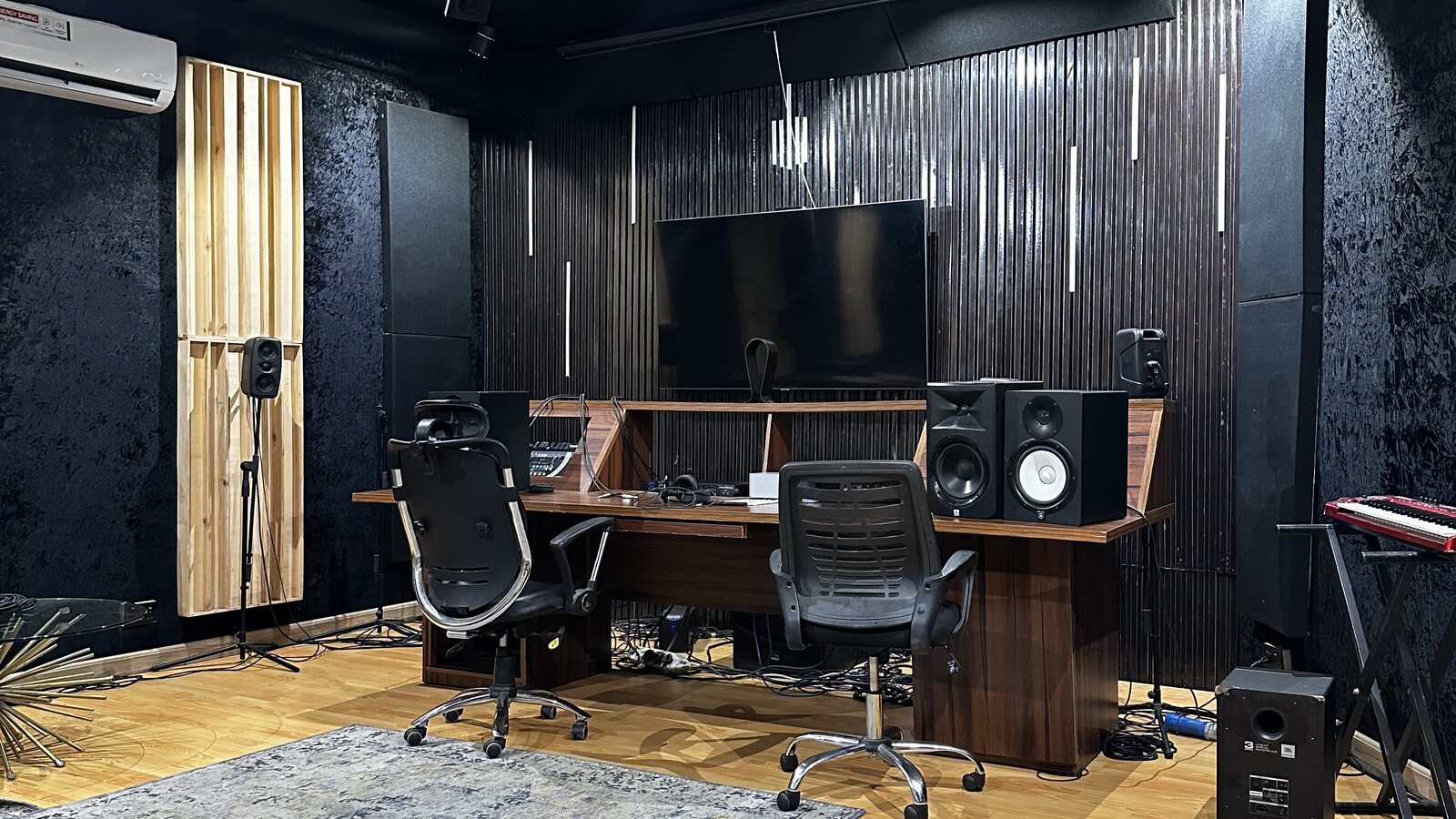
At FreeMe Space in Lekki, Lagos, the soundstage is purpose-built for the kind of high-volume, broadcast-quality production that African artists need to compete internationally. At ₦1 million per day, it includes a Dolby Atmos-certified mixing suite, one of the few in West Africa, that allows producers to create 360-degree immersive mixes for Apple Music Spatial Audio and Tidal HiFi.
The podcast studio handles complementary production needs, artist interviews, behind-the-scenes content, and sync-optimised video, that extend the commercial value of every studio session. Everything produced inside the facility flows through FreeMe's distribution pipeline to every major DSP simultaneously.
This is the infrastructure stack that makes African music production a viable, scalable business. Talent was never the constraint. Now the full stack is coming together.
---
Ready to Produce at World-Class Standards?
African music production is reshaping global culture, and the facilities, distribution pipelines, and rights management tools to support that shift are available now in Lagos.
Whether you are an independent artist building your first international release cycle, a producer seeking a space that can handle broadcast-quality recording and Dolby Atmos mixing, or a brand looking for authentic African production talent, FreeMe Space has the infrastructure to make it happen.
Book a session at the FreeMe Space soundstage, enquire about daily rates, or schedule a facility tour to see the production stack in action. Contact us at info@freemespace.com or visit thefreemespace.com to get started.