Why Nigeria's Music Revenue Is Invisible (And How We're Fixing It)
Discover why Nigeria's music revenue remains invisible in global reports despite 5,000% Afrobeats streaming growth. Learn how FreeMe's Nigeria music distribution 2026 infrastructure is formalizing artist revenue.
# Why Nigeria's Music Revenue Is Invisible (And How We're Fixing It)
Nigeria dominates global music culture. Afrobeats streams grew 5,000% last year. Artists like Wizkid, Rema, and Ayra Starr command billions of plays on Spotify and Apple Music. Yet when the International Federation of the Phonographic Industry (IFPI) released its 2026 Global Music Report, Nigeria wasn't mentioned as a standalone market. This isn't because Nigerians stopped making music, it's because Nigeria's music distribution 2026 infrastructure remains fundamentally invisible to the global music industry's measurement systems.
The gap is staggering. According to the IFPI GMR 2026, Sub-Saharan Africa generated $120 million in recorded music revenue last year, growing 15% year-over-year. But here's the shock: South Africa captured 78% of that ($93.7 million). Nigeria, with 220 million people, the most culturally dominant music scene on the continent, and exponential streaming growth, accounts for less than $26 million of tracked revenue. That's invisible. And that invisibility is costing Nigerian artists, labels, and the music economy billions.
The Revenue Gap: What the Numbers Actually Show
When you look at the IFPI Global Music Report 2026, Sub-Saharan Africa appears as a single region, lumping Nigeria, South Africa, Kenya, and dozens of other countries into one category. This regional approach masks a brutal truth: the infrastructure that captures music revenue doesn't exist equally everywhere.
South Africa's $93.7 million in recorded music revenue comes from a formalized, internationally-connected distribution ecosystem. Streaming platforms report to IFPI member organizations. Collecting societies manage rights. Money flows through licensed channels. The system works, and gets counted.
Nigeria's actual music revenue is much larger than $26 million. But most of it never reaches the measurement systems that the global industry relies on. Here's why:
1. Unlicensed Platforms Dominate Local Consumption
Most Nigerians don't stream from Spotify or Apple Music. They use YouTube, TikTok, WhatsApp, and local platforms like Boomplay that operate outside formal IFPI reporting channels. An artist's song might accumulate 100 million streams on these platforms, but if those platforms don't report to IFPI-member collecting societies, those streams are invisible to the global music economy. They're heard, they're loved, they're shared, but they're not counted.
2. The Collecting Society Pipeline Is Broken
IFPI tracks recorded music revenue through its member companies: rights organizations, distributors, and DSPs that formally report data. Nigeria's MCSN (Music Copyright Society of Nigeria) has limited formal integration with international IFPI reporting mechanisms. Without that connection, Nigerian artists' streaming revenue gets trapped in parallel systems that don't feed into global data aggregation.
Compare this to South Africa, where the SAMRO (South African Music Rights Organization) has decades of institutional integration with international bodies. The pipeline works. Money flows through it. It gets counted.
3. Streaming Fraud Inflates Local Numbers, Deflates Real Revenue
The IFPI flagged streaming fraud as its #1 issue in 2026. Deezer alone reported 60,000 AI-generated tracks being uploaded daily, with 85% of AI music streams being fraudulent. When platforms are flooded with bot streams, legitimate revenue gets lost in the noise. Payment pools shrink. Real artists earn less. And the whole category looks less valuable than it actually is.
4. Currency Collapse Hides Actual Growth
Nigeria's Naira has lost 60% of its value against the USD in the past three years. A growing Naira-denominated music market looks tiny when converted to dollars for IFPI's report. An artist earning ₦10 million from streaming in 2023 might earn ₦12 million in 2025 (actual growth), but in USD terms, that's invisible because the conversion rate has collapsed. The revenue is real. The growth is real. But the numbers don't show it.
The Latin America Comparison: The Path Nigeria Didn't Take (Yet)
This story has a parallel in Latin America a decade ago. In 2014-2016, Mexico and Brazil looked similar to Nigeria today: explosive cultural impact globally, huge streaming audiences, but minimal formal recorded music revenue showing up in international reports.
What changed? Infrastructure investment. Brazil invested in collecting society modernization and attracted major label partnerships. Mexico did the same. By 2026, Brazil ranks #8 and Mexico ranks #10 in global recorded music revenues. That growth came from formalizing distribution, connecting artists to internationally-reporting DSPs, and building bridges between local streaming and global revenue systems.
Nigeria has the streaming growth. It has the cultural dominance. What it's missing is the infrastructure that converts streams into tracked, reported, globally-visible revenue.
Why This Matters: The Artist's Perspective
For a Nigerian artist, this invisibility has real consequences:
- •Harder to get international deals: Labels use IFPI data to assess market size and artist potential. If Nigeria's music market appears to be $26 million instead of the actual $150-200 million, international labels underprice partnerships and underinvest in Nigerian talent.
- •Lower streaming payouts: Artists on platforms that don't report IFPI data earn less per stream than those on formal DSPs.
- •Limited access to financing: Banks and investors use IFPI data to assess music industry revenue. An invisible market means limited credit access for artists, labels, and studios.
- •Undervalued catalogs: When catalogs are sold or licensed, they're valued based on tracked revenue. Invisible revenue means undervalued assets.
The FreeMe Solution: Making Nigeria's Music Distribution 2026 Visible
This is where FreeMe Digital steps in.
FreeMe's entire distribution strategy is built on solving this invisibility problem. Here's how:
1. IFPI-Reporting Distribution Pipeline
FreeMe connects Nigerian artists to DSPs (Spotify, Apple Music, Amazon Music) that formally report to IFPI-member organizations. This isn't just streaming, it's visibility. Every stream gets counted. Every placement gets tracked. Your music becomes part of the official global music economy, not a shadow economy.
When you distribute through FreeMe, your streams don't just generate revenue, they generate *reportable* revenue. This makes you more valuable to labels, investors, and international partners.
2. Anti-Fraud Positioning
As the IFPI cracks down on streaming fraud, FreeMe is positioning as the "clean distribution" provider. We verify authentic streams, ensure platform compliance, and maintain the integrity of your catalog. In a market plagued by bots and fake plays, authentic distribution is a competitive advantage.
3. Same-Day Distribution
FreeMe's distribution tools integration allows same-day distribution to all major DSPs. Instead of waiting days or weeks for your music to go live globally, Nigerian artists can reach the world's streaming audience instantly. Speed matters in music, trends move fast, and being first matters.
4. Connecting to International Opportunities
Once your music is on IFPI-reporting DSPs, new opportunities open: sync licensing, international label partnerships, playlist placement, and publishing deals. The invisible market doesn't get these opportunities. The visible market does.
The Broader Opportunity: Nigeria's Music Economy at an Inflection Point
Nigeria's music revenue invisibility isn't a bug, it's a feature of an economy at an inflection point. Right now, the formal and informal music markets exist in parallel. There's money flowing, but most of it never crosses into the global reporting systems.
The next decade will see that converge. The question is: who captures that convergence?
FreeMe is betting that the answer is formalized, IFPI-compatible distribution infrastructure. Not because the informal market is going away, but because the formal market is where international money, partnerships, and legitimacy flow. Nigerian artists need to exist in both.
What This Means for You: Three Levels of Action
If you're an artist: Your music deserves to be counted. Distribute through a platform that reports to IFPI. Make your music visible to international labels, investors, and partners. Your streams are valuable, make sure they're tracked.
If you're a label or studio: Nigerian music is globally dominant. Make sure your distribution infrastructure reflects that. Partner with a distributor who can move your catalog from invisible to visible.
If you're investing in music: The arbitrage between Nigeria's cultural impact and its measured economic value is closing. Early movers in formalizing that distribution will capture enormous value. This is the Latin America moment for Nigeria.
Book Your Distribution Consultation Today
Nigeria's music industry is at an inflection point. Your music shouldn't be invisible.
FreeMe Digital provides distribution infrastructure that connects Nigerian artists to the global music economy. From same-day DSP delivery to IFPI-reporting partnerships, we make your music visible, valuable, and internationally accessible.
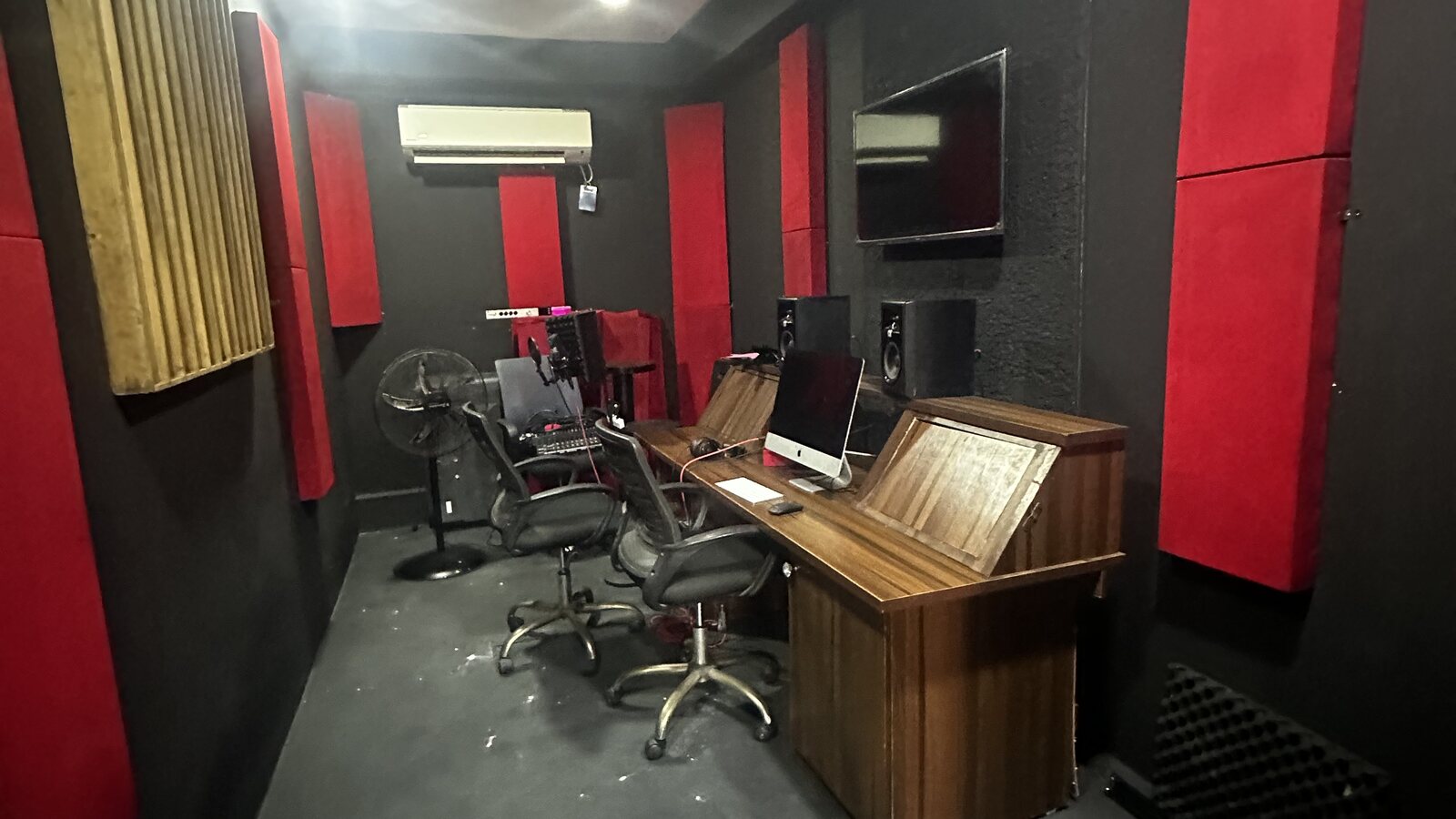
Ready to make your music official? Book a distribution consultation with FreeMe Digital and learn how we're formalizing Nigeria's music economy. Or schedule a tour of our Lekki production facility to see how we're building the infrastructure that connects Nigerian artists to the world.
Your music is already global. Your distribution should be too.